This is the mid-point report, written by Community Engagement Librarian Ellen Ward-Packard, for Lake Geneva Public Library’s 2023 Ideas to Action project, Leaves and Sheaves: Papermaking for Art and the Environment. This project is connecting books, history, recycling, and plant foraging with a hand papermaking project that encourages sustainable thinking and innovative adaptations of traditional arts and crafts
I first learned how to make paper at the now-closed Conserve School in the Wisconsin north woods. In Earth Art class, we collected banana peels, onion skins, and other vegetable detritus from the dining hall and turned it into knobbly, multicolored paper. Papermaking is an endlessly mutable activity; you can make paper out of just about any fibrous organic material, from old bedsheets to invasive plants, and you can shape paper into sheets, into molded shapes, into household furnishings, into just about anything. Papermaking is also a very forgiving activity; you can always throw a messed-up sheet back in the beater and start again.
Despite papermaking’s many virtues and broad appeal for young and old, most people have never made a sheet of paper. Broad availability of consistently shaped and colored sheets mean that no one needs to make their own paper and the difficulty of getting a small scale beater (ours was made by a tiny workshop in New Zealand) means that it’s a craft that isn’t generally available at schools or art centers. After I left Conserve School, I didn’t make paper for nearly a decade.
One of the first really innovative and successful programs I ran as a new librarian was a Halloween costume swap. It was straightforward; the library collected unwanted and outgrown costumes, sorted them by size, and then made the whole inventory available for free on a Saturday afternoon. We gave away nearly 100 costumes the first year. This model of redistribution inspired other programs; we now hold regular plant swaps, and the idea for our WiLS-supported project came when I began listing things people have and don’t want (old clothes, holey towels, invasive plants) and realized that many, many unwanted items can be repurposed into beautiful art or writing paper.
Our papermaking classes are supported by the abundant fabric scraps I’ve collected from local quilters, dish towels my coworker has worn out, and snippings of embroidery floss from previous library programs. Later this summer, we’ll take a group out to a local nature conservancy, and see what sort of paper can be made from invasive thistle.
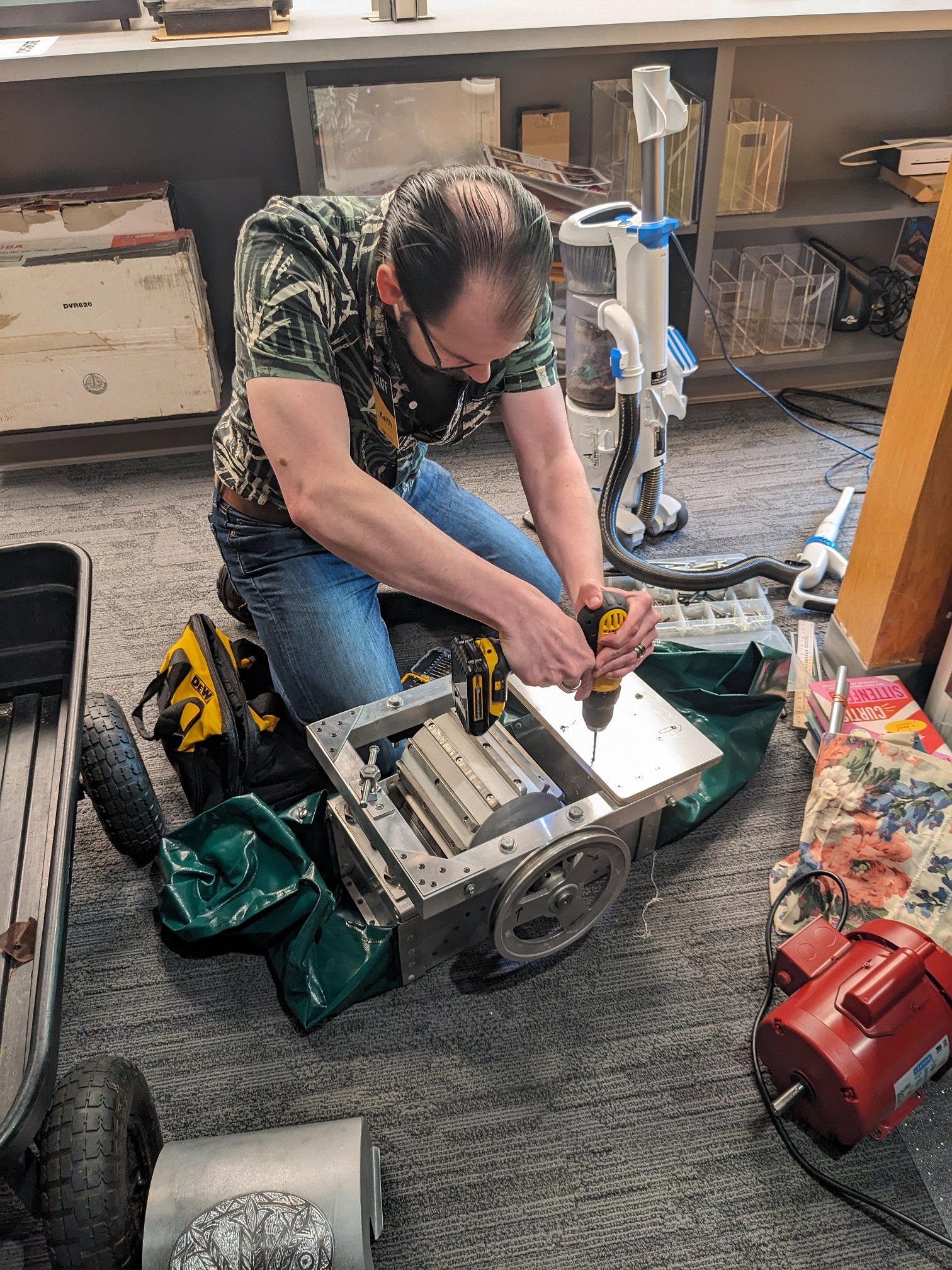
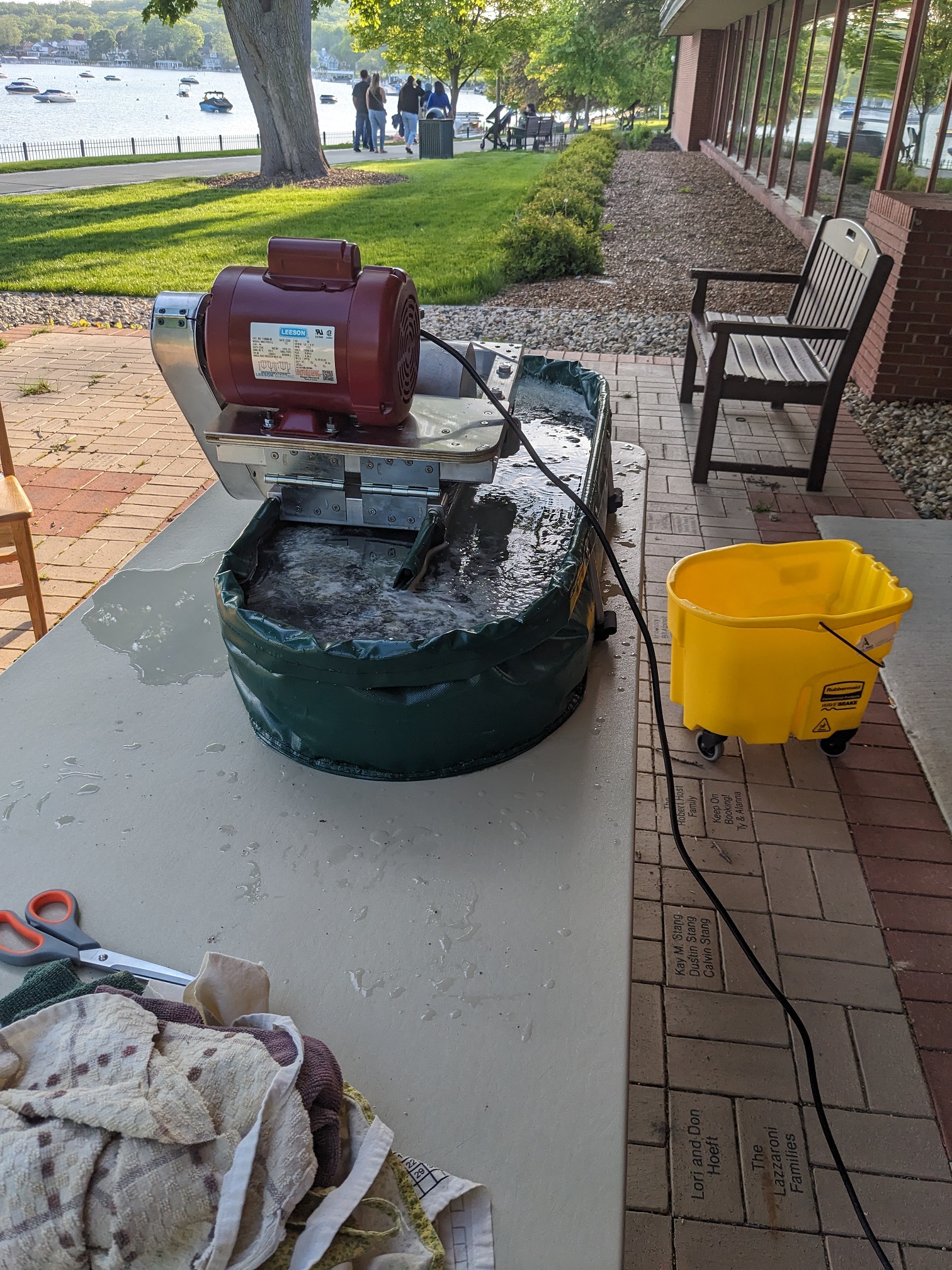
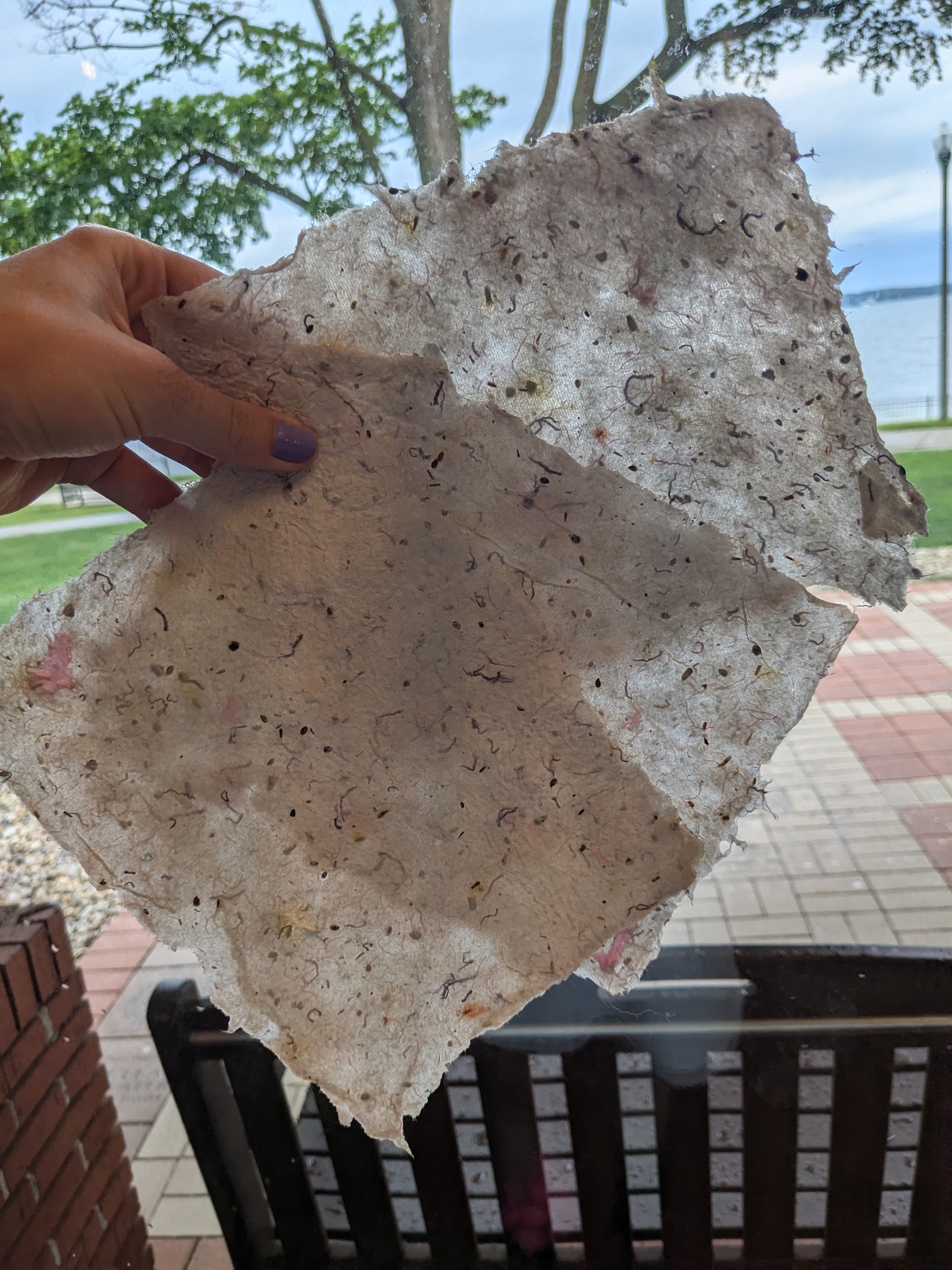
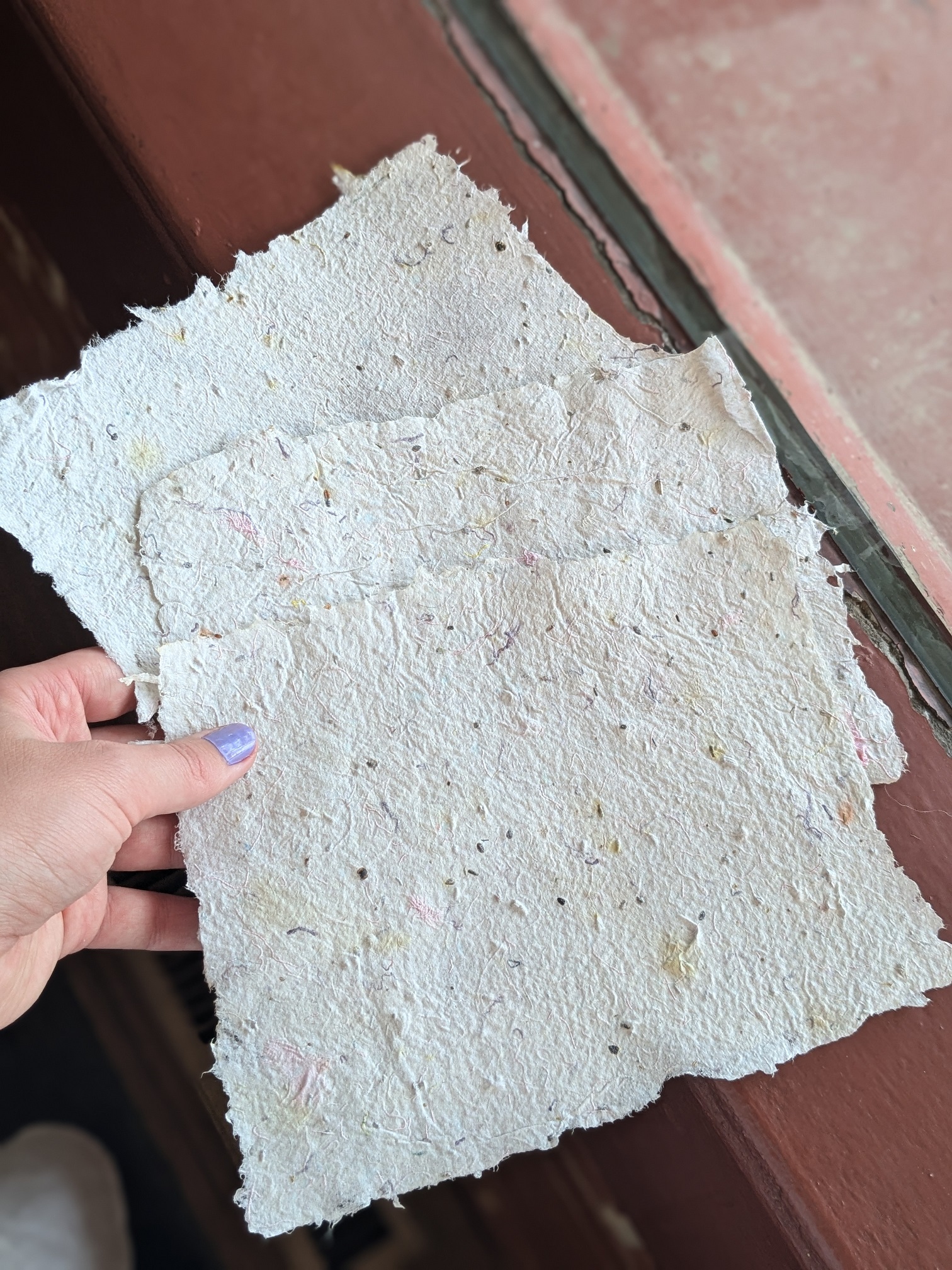
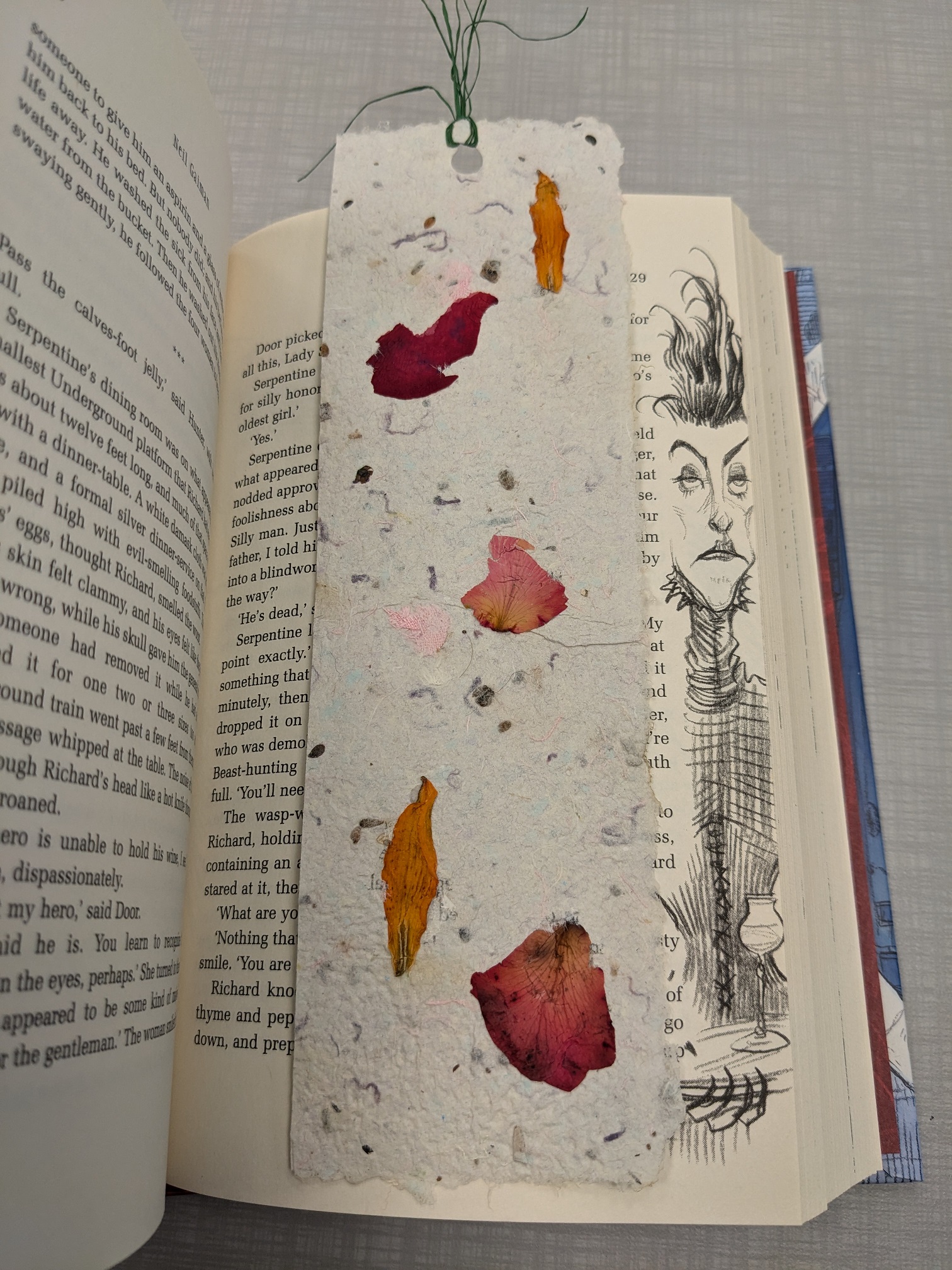
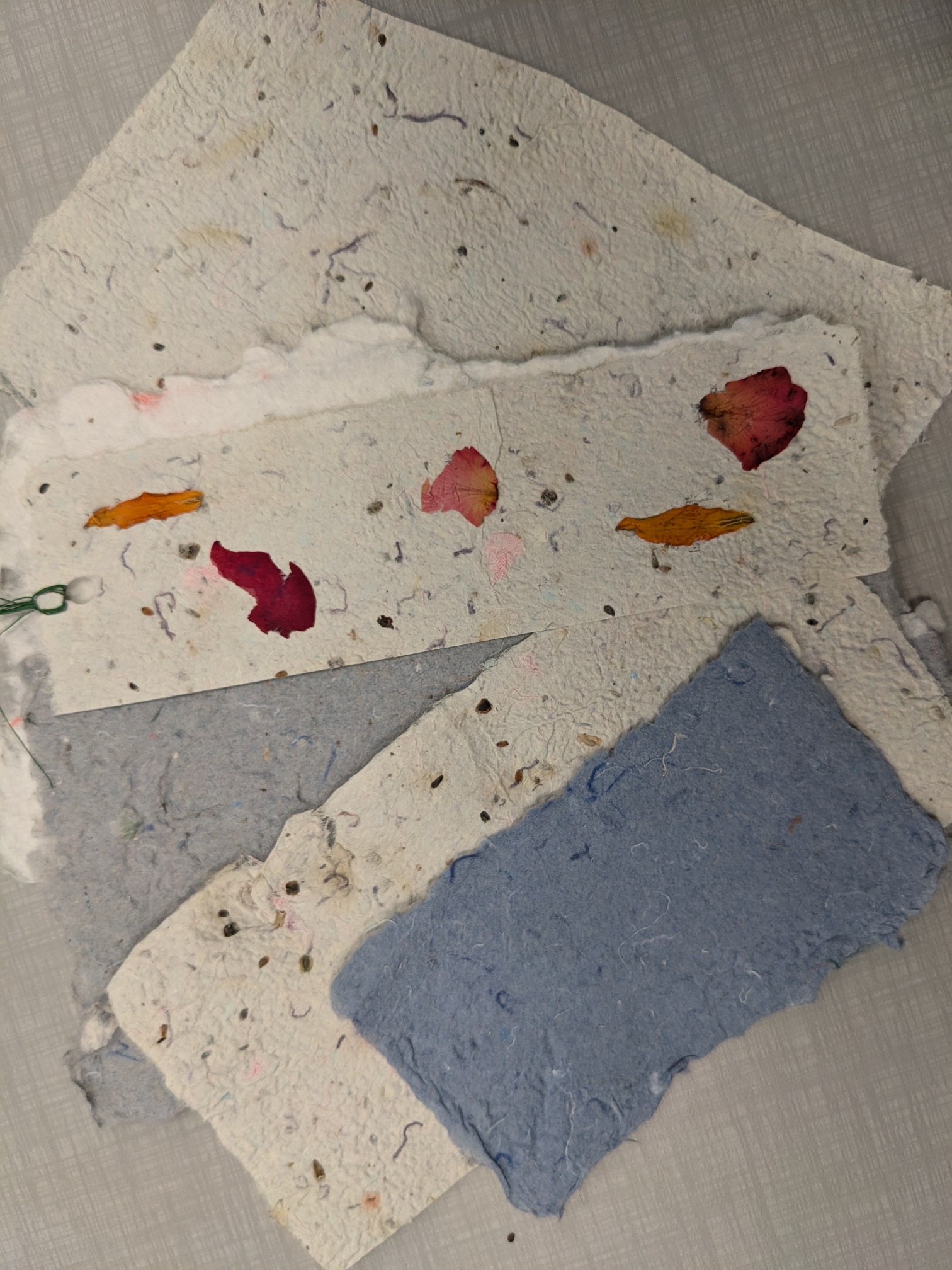
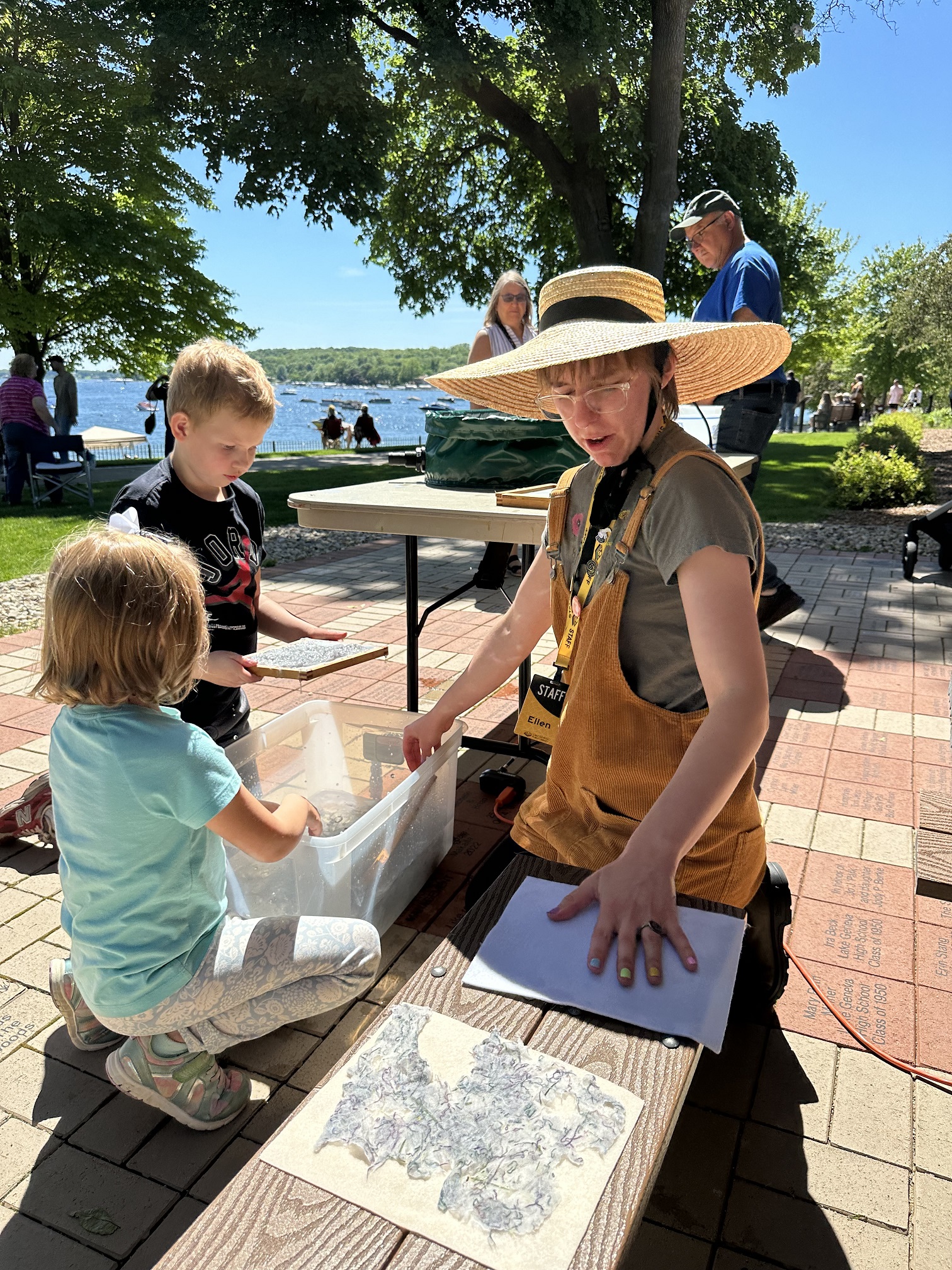
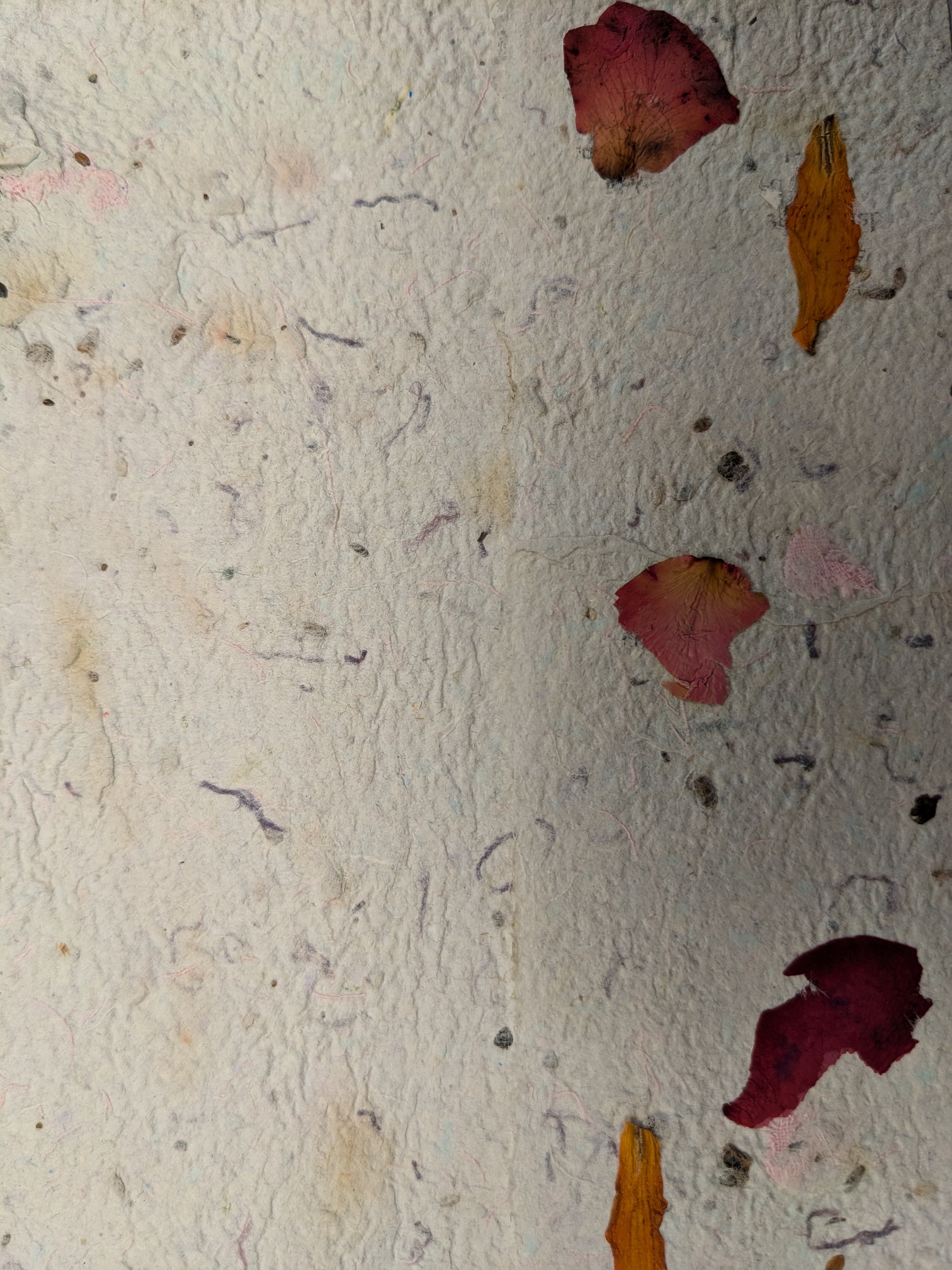
Papermaking attracts all ages. Kids enjoy the textures of wet paper pulp and the chance to splash around in the beater tub; adults enjoy the alchemy of turning waste material into something surprisingly beautiful.
One aspect of the project that has surprised me is how cohesive the informational and experiential goals have been. I envisioned a clear divide between historical education and actual papermaking, with the latter taking place as an indoor lecture. Instead, every time I get the Hollander beater (an historic paper pulping machine) out and running, someone approaches with a question and we get into an impromptu discussion of industrial papermaking, the history of stamp mills, local materials that can be made into paper, etc. Lake Geneva sees a lot of visitors, so often, if someone approaches me during a demonstration, that is the only time I will get to interact with them. As such, I’ve adjusted classes and demonstrations to incorporate background information into the process of making paper.
As July begins, we are moving into more formal, multi-day papermaking classes in which participants will have full ownership of the papermaking process, from selecting materials to using the finished sheets:
Even in the age of digital content, libraries remain substantially reliant on print formats. What better way to learn about book history than to make paper using a process that has remained largely unchanged since the 17th century?